Recovery from extreme desiccation enhanced by humid air and elevated CO2 in a widespread desert plant
Abstract
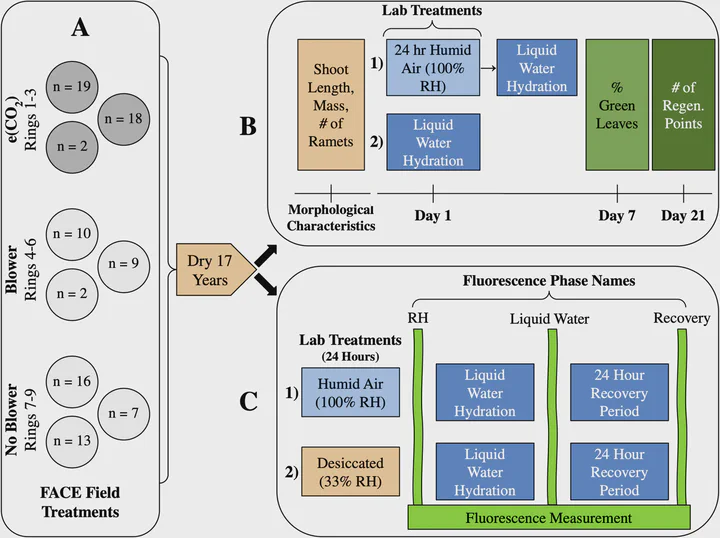
How do desert mosses recover after decades without water, and can atmospheric humidity alone support their revival? This study examined the effects of elevated CO2 and humid air on the desiccation-tolerant moss Syntrichia caninervis, using plants exposed to 10 years of experimental CO2 enrichment in the Mojave Desert and subsequently stored dry for 17 years. Mosses grown under elevated CO2 had greater biomass, longer shoots, and more ramets, and recovered more rapidly following rehydration. Remarkably, shoots regained photosynthetic function after exposure to humid air alone, without liquid water, and prior exposure to humidity improved subsequent regeneration. These findings highlight the extraordinary resilience of desert mosses and suggest that atmospheric moisture and rising CO2 can influence their survival and recovery under changing dryland climates.